

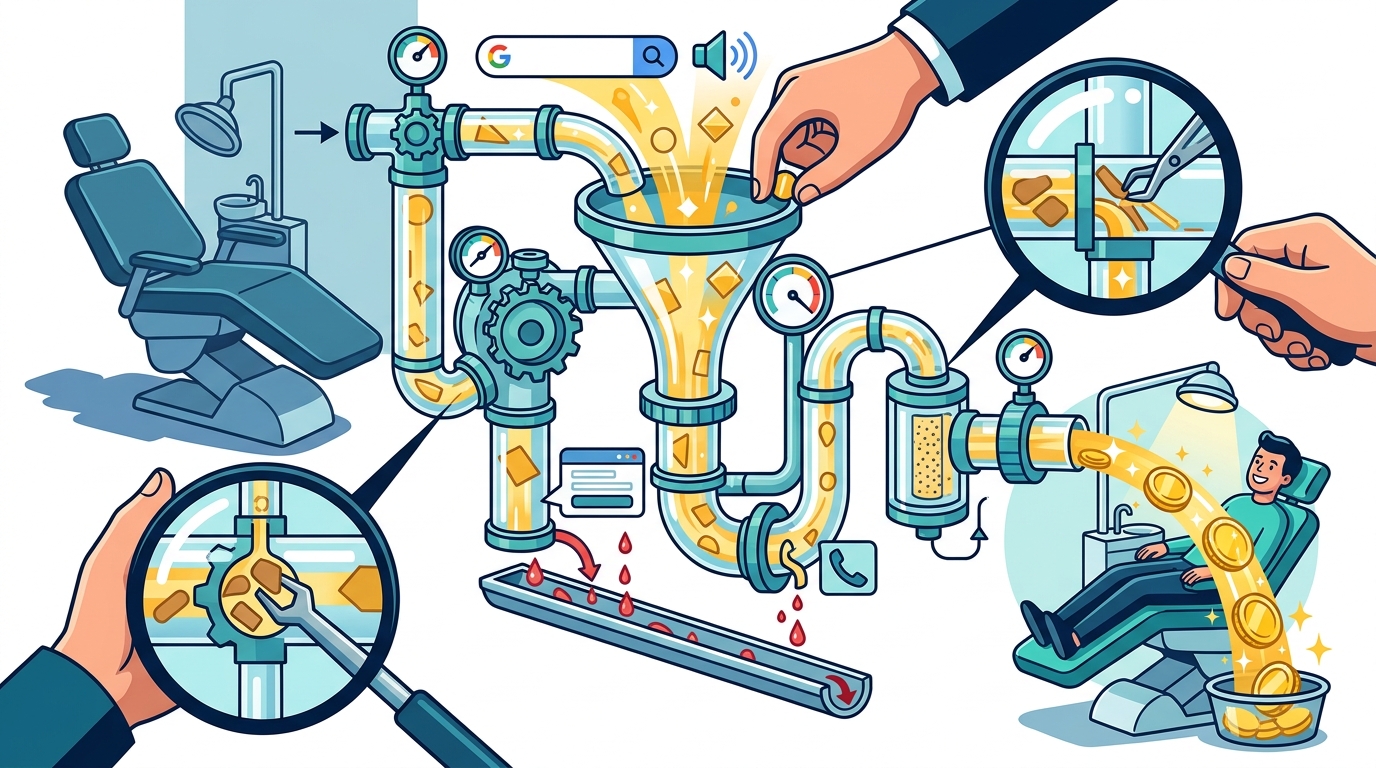
Every empty dental chair represents a direct loss of revenue that no amount of clinical excellence can immediately replace. When a high-value patient in your area searches on Google or an AI assistant, are you showing up, or is it your competitors getting the call? The answer often lies not in the volume of your marketing spend, but in the rigorous quality control of your patient acquisition systems. Without strict oversight, even the most aggressive campaigns can leak revenue through poor conversion paths, unqualified leads, and inconsistent patient experiences. This guide details the exact operational frameworks required to stop the bleeding and build a predictable new patient flow.
Defining Quality Control in Dental Marketing
Before implementing changes, we must establish what quality control actually means in this context. Patient flow is the systematic movement of prospective patients from initial awareness to scheduled appointment. When this flow is uncontrolled, practices suffer from "ghost leads" or low-value appointments that do not result in treatment acceptance.
Quality control is not merely about getting more calls. It is about ensuring that every call, click, and click-to-call action is tracked, qualified, and converted. According to recent industry data, dental practices that implement strict quality control measures see an average 5X return on investment compared to those that rely on passive marketing tactics. This disparity exists because most practices treat marketing as a "set it and forget it" expense rather than a dynamic operational system.
To achieve this level of precision, you must move beyond vanity metrics like impressions and focus on actionable data points. This requires a shift in mindset from buying ads to engineering outcomes. The goal is to create a self-correcting system where poor performance is identified and fixed in real-time, not months later.
Auditing Your Digital Health and Conversion Paths
The first step in improving quality control is a comprehensive audit of your digital infrastructure. If your website is slow, confusing, or inaccessible, no amount of traffic will save you. A broken conversion path is the primary cause of lost revenue in dental marketing.
Technical Performance and Accessibility
Your website must load instantly on mobile devices, as the majority of dental searches occur on smartphones. Slow load times directly correlate with higher bounce rates. Furthermore, accessibility is not just a legal requirement; it is a quality control metric. Accessibility is the design of products and environments usable by people with a wide variety of disabilities. By ensuring your site complies with Web Content Accessibility Guidelines (WCAG 2.0), you expand your potential patient base and reduce liability.
At New Patients Flow, we utilize advanced accessibility widgets and rigorous testing protocols to ensure that every patient, regardless of ability, can navigate your practice’s digital presence with ease. This includes clear contrast ratios, screen reader compatibility, and intuitive navigation structures.
Conversion Path Analysis
Map every step a patient takes from landing on your site to booking an appointment. Are there too many clicks? Is the "Book Now" button visible above the fold? Data shows that simplifying the booking process can increase conversion rates by up to 30%. If a patient has to hunt for your phone number or appointment link, they will likely leave and call your competitor.
We recommend implementing a sticky call-to-action button on all mobile pages. This ensures that the option to schedule an appointment is always within reach, reducing friction and increasing the likelihood of immediate action.
Implementing Strict Lead Qualification Protocols
Not all leads are created equal. A common mistake practices make is treating every inquiry with the same level of urgency, regardless of its potential value. Quality control requires a tiered approach to lead qualification.
Defining Your Ideal Patient Profile
You must clearly define what a "high-value" patient looks like for your specific practice. Is it a new implant patient? A cosmetic veneer case? Or a consistent hygiene patient? Lead qualification is the process of determining whether a prospective customer has the resources and authority to purchase a product or service. By establishing clear criteria, your team can prioritize calls that align with your practice’s growth goals.
For example, if your goal is to increase production, you might prioritize patients who have expressed interest in specific procedures. If your goal is to fill hygiene slots, you might focus on reactivating dormant patients. This targeted approach ensures that your marketing spend is directed toward the most profitable outcomes.
Automated Qualification Filters
Use automated forms and chatbots to pre-qualify leads before they reach your front desk. Ask specific questions about insurance, timeline, and treatment needs. This not only saves your team time but also ensures that the leads they receive are ready to book. According to industry benchmarks, practices that use automated qualification see a significant reduction in no-shows and an increase in treatment acceptance rates.
Aligning Front Desk Teams with Marketing Promises
Marketing brings the patient to the door, but the front desk team closes the deal. A disconnect between your marketing message and your phone etiquette is a critical failure in quality control. If your ads promise a "relaxing, modern experience," but your phone team is rushed or unhelpful, you will lose the patient.
Standardized Phone Scripts and Tone
Develop standardized scripts that reflect your brand’s voice. These scripts should not be robotic but should guide the conversation naturally toward booking. Train your team to listen actively and empathize with the patient’s concerns. Phone etiquette is the set of rules and behaviors that govern professional telephone communication. In dental marketing, this etiquette is the final hurdle before a patient becomes a booked appointment.
Regular call monitoring and feedback sessions are essential. Record calls and review them with your team to identify areas for improvement. Celebrate wins and address losses constructively. This continuous feedback loop ensures that your team remains aligned with your quality control standards.
Consistent Patient Experience
Ensure that the experience a patient has online matches their in-office experience. From the clarity of your website to the warmth of your front desk, every touchpoint must reinforce your brand promise. Dr. Ilan Gamburg, a successful practice owner featured in our podcast, emphasizes that creating a positive office culture and consistent patient experience is crucial for practice success. When patients feel valued from the first call, they are more likely to stay and recommend your practice to others.
Tracking ROI and Production Metrics
You cannot improve what you do not measure. Quality control in dental marketing relies on rigorous tracking of key performance indicators (KPIs). These metrics provide the data needed to make informed decisions and optimize your strategy.
Key Metrics to Monitor
- Cost Per Acquisition (CPA): How much does it cost to get one new patient?
- Conversion Rate: What percentage of visitors become booked appointments?
- Treatment Acceptance Rate: What percentage of booked appointments complete treatment?
- Return on Investment (ROI): What is the total revenue generated compared to marketing spend?
At New Patients Flow, our systems average a 5X ROI for our clients. This is achieved by continuously monitoring these metrics and adjusting campaigns in real-time. We do not just report numbers; we provide actionable insights to help you grow your practice.
Attribution Modeling
Understand which marketing channels are driving the most valuable patients. Use attribution modeling to track the patient journey from first touch to conversion. This helps you allocate your budget to the most effective channels and eliminate waste. For instance, if social media ads are driving traffic but not conversions, you might need to adjust your targeting or landing page design.
Key Takeaways
- Predictable Flow: Quality control ensures consistent new patient flow, providing financial predictability and growth.
- 5X ROI Potential: Practices with strict quality control systems average a 5X return on investment.
- Auditing is Critical: Regular audits of digital health and conversion paths prevent revenue leakage.
- Lead Qualification: Strict qualification protocols ensure your team focuses on high-value patients.
- Team Alignment: Front desk teams must be trained to match marketing promises with exceptional phone etiquette.
- Data-Driven Decisions: Tracking ROI and production metrics allows for real-time optimization.
- No Long-Term Contracts: Effective marketing should be flexible and results-oriented, not locked into rigid agreements.
Frequently Asked Questions
What is the most important metric for dental marketing quality control?
The most important metric is the Return on Investment (ROI). While cost per lead is useful, ROI tells you the actual financial impact of your marketing efforts. A high ROI indicates that your quality control measures are effectively converting leads into profitable patients.
How often should I audit my dental marketing?
You should audit your marketing monthly. Digital landscapes change rapidly, and patient behaviors shift. Regular audits allow you to identify issues early and adjust your strategy before they impact your revenue. We recommend a deep dive quarterly to assess long-term trends.
Can small dental practices benefit from quality control?
Absolutely. Small practices often have less margin for error, making quality control even more critical. By focusing on high-value patients and efficient conversion paths, small practices can compete with larger competitors and achieve significant growth.
What role does AI play in dental marketing quality control?
AI enhances quality control by providing real-time data optimization and predictive analytics. It helps identify patterns in patient behavior and automate routine tasks, allowing your team to focus on high-touch interactions. AI-powered tools can also improve accessibility and personalization, enhancing the patient experience.
How do I ensure my front desk team is aligned with marketing?
Regular training and communication are key. Share marketing goals and patient feedback with your team. Use call recordings and role-playing exercises to reinforce best practices. Ensure that your marketing materials clearly communicate the value proposition so your team can deliver on those promises.
What is the average cost of dental marketing services?
Costs vary widely based on the scope of services and the size of the practice. However, the focus should always be on value rather than cost. Practices that invest in quality control see an average 5X ROI, making the investment highly profitable. We offer transparent pricing with no long-term contracts to ensure flexibility.
How does New Patients Flow ensure quality control?
We combine human expertise with AI precision. Our team of dental marketing specialists works closely with your practice to define goals, implement tracking, and optimize campaigns. We provide regular reports and strategy calls to ensure we are meeting your quality control standards.
Ready to Improve Your Dental Marketing Quality?
Stop guessing and start growing. If you are ready to take your practice to another level, we can help. Our team specializes in helping dental practices fill their schedules with high-value patients using strategies built on 14 years of experience. We handle everything with minimal time required from you, so you can focus on your patients.
Book a Free Strategy Call today. We will analyze your current marketing efforts and recommend opportunities for improvement. No contracts, no guesswork, just consistent, measurable growth.
Schedule Your Free Strategy Call Now