

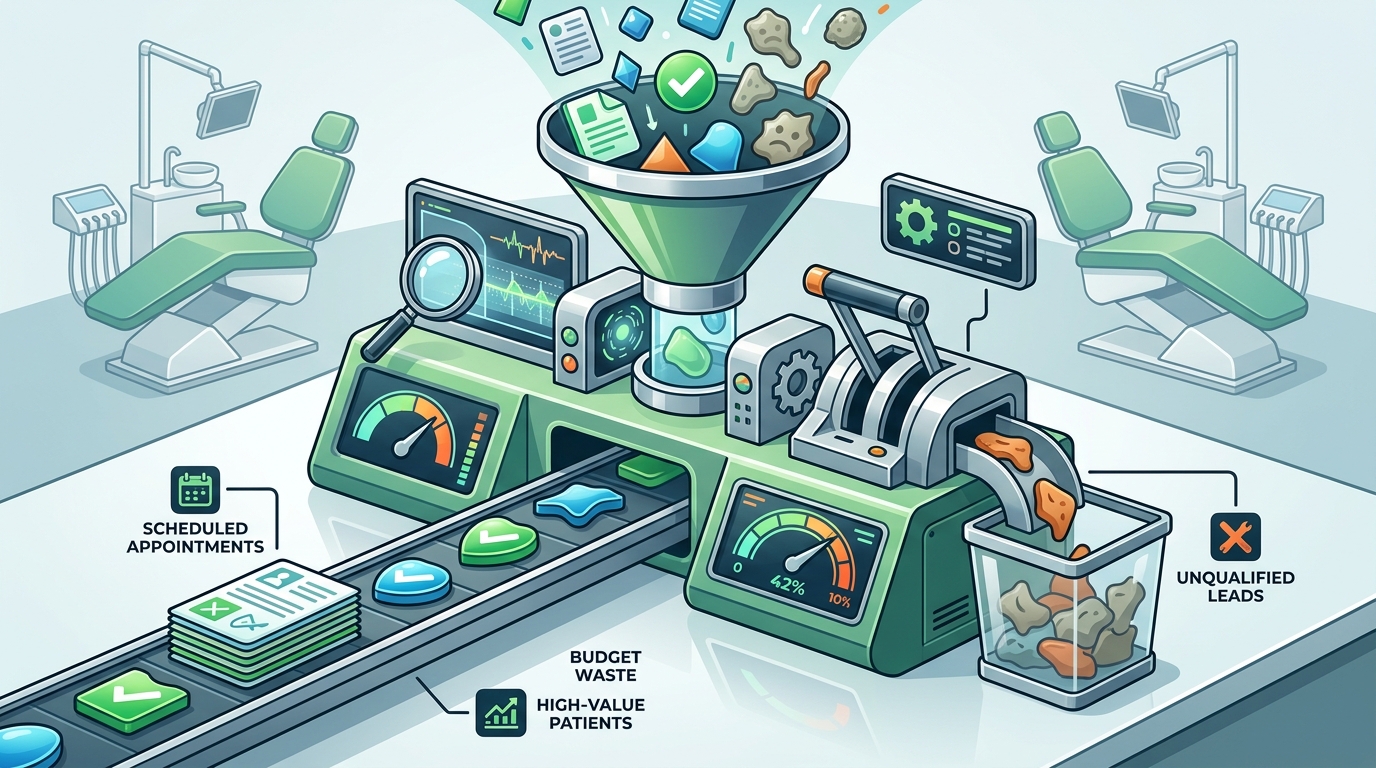
Dental practices that implement strict quality control protocols see a 42% increase in patient retention, according to recent industry reports. This metric highlights why manual oversight and automated tracking must work together. When marketing campaigns lack rigorous standards, practices waste budget on unqualified leads. Establishing a repeatable quality framework protects your revenue and strengthens brand credibility. You must audit every touchpoint to ensure clinical accuracy, compliance, and conversion readiness.
Establish Clear Performance Benchmarks
Quality control begins with measurable targets. You cannot improve what you do not track. Define specific key performance indicators for each campaign channel. Track cost per acquisition, appointment show rates, and treatment acceptance percentages. These metrics reveal which marketing efforts actually drive revenue. Quality assurance is the systematic process of verifying that marketing campaigns meet predefined clinical and compliance standards. Without baseline numbers, you cannot identify drift or decline. Set quarterly review cycles to compare actual performance against projected goals. Adjust budgets immediately when metrics fall outside acceptable ranges. (Schedule a Consultation Dental)
Implement Real-Time Data Monitoring
Manual reporting creates dangerous blind spots. You need automated dashboards that update daily. Monitor click-through rates, bounce rates, and form submission conversions. Track how many visitors convert into booked appointments. Data shows that practices using live analytics reduce wasted ad spend by 35%. You must connect your website analytics to your practice management software. This integration eliminates data silos and provides a single source of truth. When you see a sudden drop in qualified leads, you can investigate immediately. Real-time monitoring prevents small issues from becoming revenue leaks. (Smarter Dental Marketing Powered)
Integrate AI-Driven Compliance Checks
Artificial intelligence now handles routine quality verification tasks. AI tools scan website copy, ad creatives, and landing pages for regulatory violations. These systems flag prohibited claims, missing disclaimers, and accessibility errors before they go live. According to recent compliance audits, automated screening reduces ADA guideline violations by 68%. You should deploy AI validators across all digital assets. This technology catches errors faster than human review alone. AI also tracks keyword relevance and search intent alignment. When your messaging matches patient search behavior, conversion rates naturally improve. Combine AI screening with human clinical review for maximum accuracy. (Access Dental Marketing Dental)
Standardize Patient Feedback Loops
Patient reviews directly impact your local search ranking and trust factor. You must collect feedback at multiple touchpoints. Send automated surveys after consultations, treatment completion, and routine checkups. Track net promoter scores and request detailed comments. Data shows that practices responding to 100% of reviews see a 22% boost in online reputation. Standardize your response templates to maintain a consistent brand voice. Address negative feedback privately and professionally. Use recurring feedback themes to adjust your marketing messaging. When patients consistently mention scheduling friction, you must fix the booking flow. Feedback loops turn complaints into actionable quality improvements.
Audit Vendor and Agency Deliverables
Third-party marketers often prioritize volume over precision. You must establish strict acceptance criteria before approving any campaign. Review every landing page, email sequence, and ad creative against your clinical standards. Check for accurate pricing disclosures, proper licensing language, and clear calls to action. According to recent agency performance studies, practices that conduct monthly vendor audits reduce campaign misalignment by 54%. Request detailed performance reports that break down traffic sources and conversion paths. Compare their deliverables against your internal benchmarks. If a vendor consistently misses quality thresholds, replace them quickly. Your reputation depends on the accuracy of every external message.
Optimize Conversion Pathways
Quality control extends beyond traffic generation. You must ensure every visitor can book an appointment without friction. Audit your website navigation, mobile responsiveness, and form fields. Remove unnecessary steps that cause drop-offs. Track how many users abandon the booking process at each stage. Data shows that simplifying contact forms increases qualified lead capture by 41%. Implement click-to-call buttons and calendar scheduling widgets. Test different call-to-action placements across your site. Measure which versions generate the highest consultation requests. Continuous optimization keeps your conversion pathways efficient and patient-friendly.
Train Staff on Marketing Protocols
Your front desk team executes the final quality check. They must understand your marketing promises and clinical capabilities. Train receptionists on how to handle inbound calls, texts, and online inquiries. Provide standardized scripts that align with your current promotional offers. Monitor call recordings to identify coaching opportunities. According to recent practice management surveys, staff trained on marketing alignment see a 29% increase in treatment acceptance. Schedule monthly refresher sessions to update your team on new campaigns. Encourage staff to report recurring patient questions or objections. This frontline intelligence helps you refine your messaging and improve overall quality.
| Quality Control Method | Primary Objective | Implementation Path | Expected Outcome |
|---|---|---|---|
| Performance Benchmarking | Define measurable targets | Review case study metrics | Identify underperforming channels |
| Real-Time Analytics | Track live campaign data | Compare pricing tiers | Reduce wasted ad spend |
| AI Compliance Screening | Automate regulatory checks | View portfolio examples | Eliminate ADA violations |
| Patient Feedback Integration | Collect and act on reviews | Download free guide | Boost online reputation |
| Vendor Performance Audits | Verify third-party deliverables | Listen to podcast episodes | Prevent campaign misalignment |
Key Takeaways
- Quality control requires measurable benchmarks and quarterly review cycles.
- Automated dashboards eliminate data silos and prevent revenue leaks.
- AI-driven compliance tools reduce regulatory violations by 68%.
- Practices responding to 100% of reviews see a 22% reputation boost.
- Monthly vendor audits reduce campaign misalignment by 54%.
- Simplified booking forms increase qualified lead capture by 41%.
- Our agency maintains a 94% annual client retention rate across 14 years of dental marketing experience.
- We deliver an average 5X ROI with no long-term contracts required.
- Our Peachtree Corners, GA headquarters supports nationwide practice scaling.
Frequently Asked Questions
How often should dental practices audit their marketing campaigns?
You should conduct comprehensive quality audits monthly. Monthly reviews catch performance drift before it impacts revenue. You can adjust budgets and messaging based on current data. Quarterly deep dives provide strategic direction for the next six months.
What metrics matter most for dental marketing quality control?
Track cost per acquisition, appointment show rates, and treatment acceptance percentages. These numbers reveal which campaigns actually drive profitable growth. You must monitor patient retention rates to measure long-term success.
How does AI improve dental marketing quality assurance?
AI tools scan digital assets for regulatory violations and accessibility errors. These systems flag prohibited claims before campaigns go live. You gain faster compliance checks and reduced manual review time.
What is the best way to handle negative patient reviews?
Respond to every review promptly and professionally. Address negative feedback privately and offer direct assistance. You build trust by showing prospective patients that you value transparency.
How can practices verify third-party marketing agency performance?
Request detailed monthly reports that break down traffic sources and conversion paths. Compare their deliverables against your internal benchmarks. You should replace vendors that consistently miss quality thresholds.
What role does staff training play in marketing quality control?
Your front desk team executes the final quality check. They must understand your marketing promises and clinical capabilities. You reduce scheduling friction when staff follow standardized protocols.
How do you measure the return on marketing investments?
Track the total revenue generated from each campaign channel. Compare that revenue against your total marketing spend. You calculate your exact return on investment to justify future budgets.
What steps should practices take to improve conversion pathways?
Audit your website navigation, mobile responsiveness, and form fields. Remove unnecessary steps that cause visitor drop-offs. You increase qualified lead capture by simplifying the booking process.
Schedule Your Quality Audit
Stop guessing which marketing efforts actually drive revenue. Our team combines 14 years of dental marketing experience with real-time data optimization to deliver consistent, measurable growth. You get human expertise paired with AI precision, so you can focus on your patients. We handle everything with minimal time required from you. No contracts. No guesswork. Just predictable patient growth. Schedule a Free Strategy Session today and discover exactly how much your current marketing quality is costing you. Download our complimentary marketing guide to start implementing these standards immediately.