

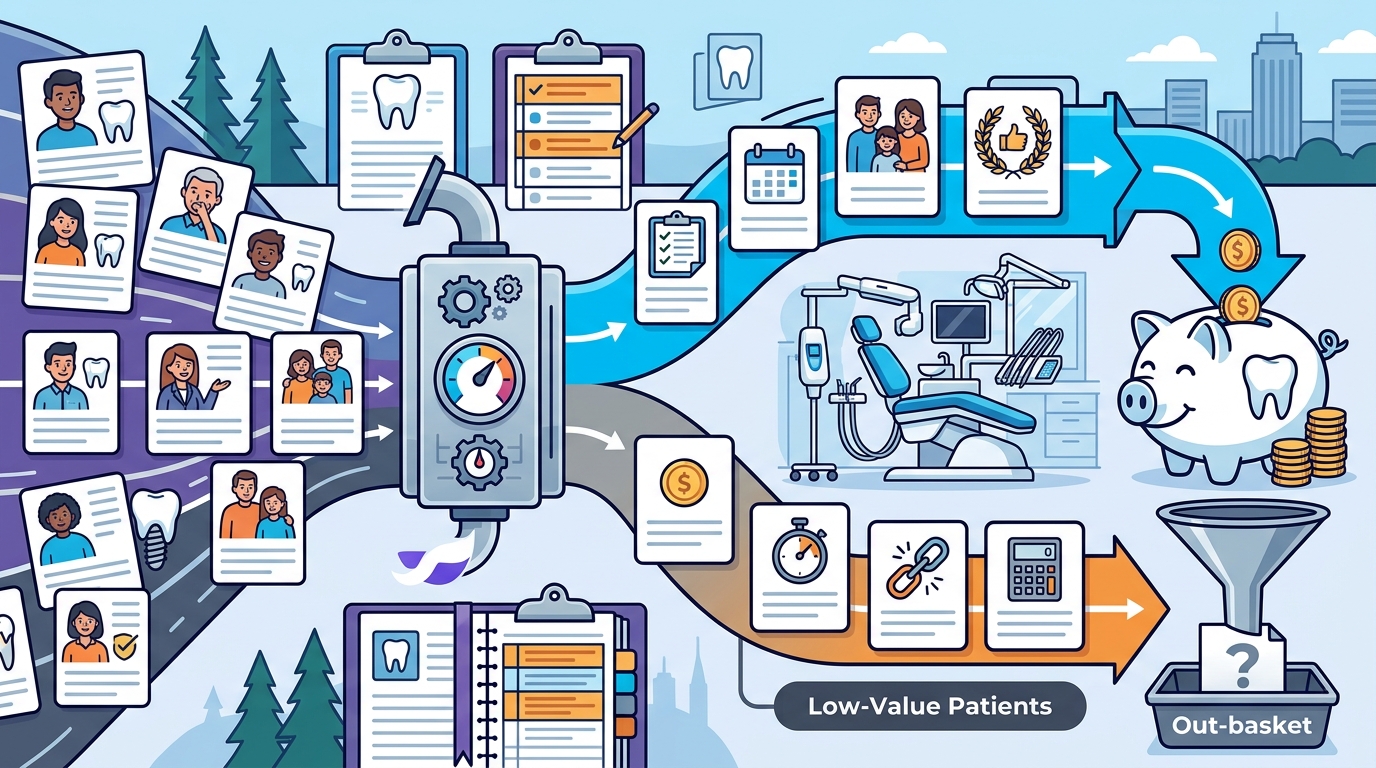
Not every new patient is created equal. Some accept treatment plans, refer friends, and stay loyal for a decade or more. Others chase the cheapest cleaning and never return. The difference between a thriving dental practice and one that barely breaks even often comes down to the quality of patients walking through the door. A high-value patient is a patient who accepts recommended treatment, maintains regular visits, refers others, and generates significant lifetime revenue for your practice. This guide breaks down the proven strategies dental practices are using in 2026 to attract more of these ideal patients and fewer bargain shoppers.
Why Patient Quality Matters More Than Quantity
The dental services market is expected to reach $471.47 billion globally in 2026, growing 7% year over year. Competition is fierce, and practices that chase volume with deep-discount ads often attract patients loyal to price, not the provider.
Marketing that focuses on patient quality targets people who are loyal, able to invest in their oral health, credit-worthy, and motivated for wants-based dentistry. Practices using patient-quality-focused growth systems consistently outperform those running generic campaigns.
The Revenue-Focused Shift
Top clinics in 2026 no longer ask "How many leads did we get?" Instead, they measure booked consultations, treatment value, and lifetime value. This shift from lead-focused to revenue-focused marketing is the single biggest change in dental marketing strategy this year.
Understanding Dental Patient Lifetime Value
Patient lifetime value (PLV) is the total revenue a patient contributes from their first visit to their last. Estimates vary widely depending on services, location, and retention, but industry figures typically range from $5,000 to $22,000 per patient. Some consultants estimate figures as high as $45,000 over a 20-year relationship.
| Patient Type | Avg. Annual Spend | Avg. Retention (Years) | Estimated PLV |
|---|---|---|---|
| Discount Seeker | $200 | 1-2 | $200-$400 |
| General / Hygiene | $600-$800 | 8-10 | $5,000-$8,000 |
| Cosmetic / Implant | $2,000+ | 10+ | $15,000-$25,000+ |
| Family (4 members) | $2,400+ | 10+ | $20,000+ |
Use the Dental New Patient Value and ROI Calculator to see what each new patient is actually worth to your specific practice.
Dominate Local SEO and Google Map Pack
Local SEO is the process of optimizing your online presence to attract patients from location-based searches. According to the American Dental Association, over 80% of patients research dental practices online before booking an appointment. The top three Google Map Pack listings capture the majority of local clicks.
Google Business Profile Optimization
Your Google Business Profile is your digital front door. Complete it with accurate hours, services, photos of your actual team, and weekly posts. Download the free guide on 8 Ways Dentists Can Improve Their Google Map Pack Rankings for actionable steps you can take today.
Hyper-Local Content
Create dedicated pages targeting neighboring towns, neighborhoods, and specific services. Practices that publish localized blog content see an average 150% growth in local search clicks within six months when paired with a comprehensive dental marketing strategy.
Use High-Intent PPC Advertising
Pay-per-click (PPC) advertising is a model where you pay only when a potential patient clicks your ad. Focus your budget on high-intent keywords like "dental implants [city]" and "emergency dentist near me" rather than broad terms. Dental paid search drives approximately 35% of practice website traffic according to recent industry data.
The key is creating dedicated landing pages for each campaign and monitoring cost per lead weekly. Practices working with dental-specific agencies typically achieve a cost per acquisition of $150 or less, compared to the industry average of $250.
Build a Website That Converts the Right Patients
Traffic means nothing if your website does not convert. A conversion-optimized dental website should have separate service pages for each procedure, clear calls to action, online scheduling, and patient education videos.
Target the Patients You Want
Your website messaging should speak directly to the type of patient you want to attract, whether that is fee-for-service, cosmetic, implant, or family dentistry. Review how dental practices across the country have used targeted websites to generate 50 or more new patient leads per month.
Leverage Reviews and Reputation Management
Online reviews are one of the biggest ranking and conversion factors in dental marketing. More reviews lead to higher Google Maps rankings and higher patient trust. Ask patients for specific reviews that mention the procedure they received, as this signals to Google that you are an authority on that service.
Reputation management is the ongoing process of monitoring, responding to, and generating patient reviews across platforms. Practices that systematically generate reviews see compounding returns in both visibility and patient quality. Learn more about how a results-driven dental marketing partner integrates reputation management into a complete growth system.
Track Results and Measure ROI
A healthy dental marketing program should show a 3:1 to 5:1 return on investment. For every dollar spent on marketing, you should generate $3 to $5 in new patient revenue. Without call tracking, form tracking, and monthly reporting, you are flying blind.
Key Metrics to Monitor
- Cost Per Acquisition (CPA): Marketing spend divided by new patients acquired
- New Patient Lead Volume: Total calls and form submissions per month
- Appointment Conversion Rate: Percentage of leads that become scheduled patients
- Treatment Acceptance Rate: How many treatment plans patients agree to
- Patient Lifetime Value: Revenue generated per patient over their relationship
Agencies like Flow New Patient Marketing include real-time lead tracking, call recordings, and monthly call handling analysis in their growth system plans, so you always know exactly where your marketing dollars go.
Key Takeaways
- High-value patients can generate $15,000 to $25,000+ in lifetime revenue compared to $200-$400 from discount seekers.
- Local SEO and Google Map Pack dominance are the foundation of attracting quality patients in 2026.
- High-intent PPC campaigns with dedicated landing pages deliver patients ready for treatment, not just price shoppers.
- Your website must be conversion-optimized and speak directly to the patient types you want to attract.
- Systematic review generation improves both search visibility and patient trust simultaneously.
- Track CPA, conversion rates, and patient lifetime value to ensure a 3:1 to 5:1 marketing ROI.
- Partnering with a dental-specific marketing agency with transparent reporting and no long-term contracts protects your investment.
Frequently Asked Questions
What is a high-value dental patient?
A high-value dental patient is someone who accepts recommended treatment plans, maintains regular visits, refers friends and family, and stays with your practice long term. These patients generate significantly more lifetime revenue than one-time visitors.
How much is a dental patient worth over their lifetime?
Estimates range from $5,000 to $22,000 or more depending on practice type, services offered, and retention rates. Including referral value, a single loyal patient could be worth $20,000 or more to your practice.
What is the best marketing channel for attracting high-value patients?
A combination of local SEO, Google Ads targeting high-intent keywords, and a conversion-optimized website consistently produces the best results. No single channel works in isolation.
How much should a dental practice spend on marketing?
Most successful practices invest 5-10% of gross revenue in marketing. The key is tracking ROI so every dollar generates measurable patient revenue. Healthy programs return $3 to $5 for every $1 spent.
Why should I avoid deep-discount promotions?
Ads promoting steep discounts like "$29 Exam and X-Ray" tend to attract patients who are loyal to price rather than your practice. These patients rarely accept treatment plans, seldom return, and increase front-desk workload without generating meaningful revenue.
Do I need a dental-specific marketing agency?
Yes. Generic agencies lack understanding of patient psychology, treatment cycles, and the competitive dynamics of local dental markets. A dental-specific agency with proven case studies will deliver significantly better ROI than a generalist.
How long does it take to see results from dental marketing?
PPC campaigns can generate leads within the first month. SEO typically takes 6 to 12 months to produce significant organic traffic. A comprehensive strategy combines both for immediate and long-term growth.
What ROI should I expect from dental marketing?
Quality dental marketing agencies deliver an average of 3X to 5X return on investment. Some practices working with specialized agencies report even higher returns, with production increases of $30,000 or more per month from online patients alone.
Ready to Fill Your Chairs with High-Value Patients?
Stop guessing and start growing. Schedule a free strategy session with Flow New Patient Marketing to get a custom competitive analysis, identify your ideal patient profile, and build a marketing plan designed to deliver measurable ROI with no contracts and no risk.